
The question of whether a train journey can still matter as a travel experience in 2026 – when an Airbus A380 can deliver you from Paris to Singapore in less time than it takes to cross France by rail – has been answered quietly and definitively over the past decade. Luxury rail tourism has doubled in inventory, tripled in price at the top end, and built itself a booking window that now stretches 14-18 months ahead for the most sought-after departures. The Venice Simplon-Orient-Express will sell out its 2026 season in Q2; the new sleeper cars on Rocky Mountaineer’s GoldLeaf service were booked through peak season before they left the factory; and the Belmond British Pullman now runs more trips in a summer than the original Pullman Company managed in the 1920s at the peak of its own curve.
What follows is a comparative review of the three operators most often requested by luxury travel advisors in 2026 – Accor’s Orient Express line, LVMH-owned Belmond, and Canada’s Rocky Mountaineer – along with the honest assessment of which journey suits which traveler.
The Orient Express, as it exists in 2026
The Orient Express as a brand and as a service is currently in a state of active evolution. Two distinct lines operate under or adjacent to the name. The Venice Simplon-Orient-Express, operated by Belmond since 1982 and using meticulously restored 1920s-era carriages, runs its signature Paris-Venice journey and a network of derivative routes (London-Venice with the Belmond British Pullman segment, Paris-Istanbul once annually, shorter regional trips). The Orient Express La Dolce Vita, Accor’s new Italian rail project, began operations in 2024 with six Italian itineraries using entirely new-built carriages in a deliberately modernist interpretation of the heritage aesthetic. They are different products under related names.
Venice Simplon-Orient-Express (Belmond)
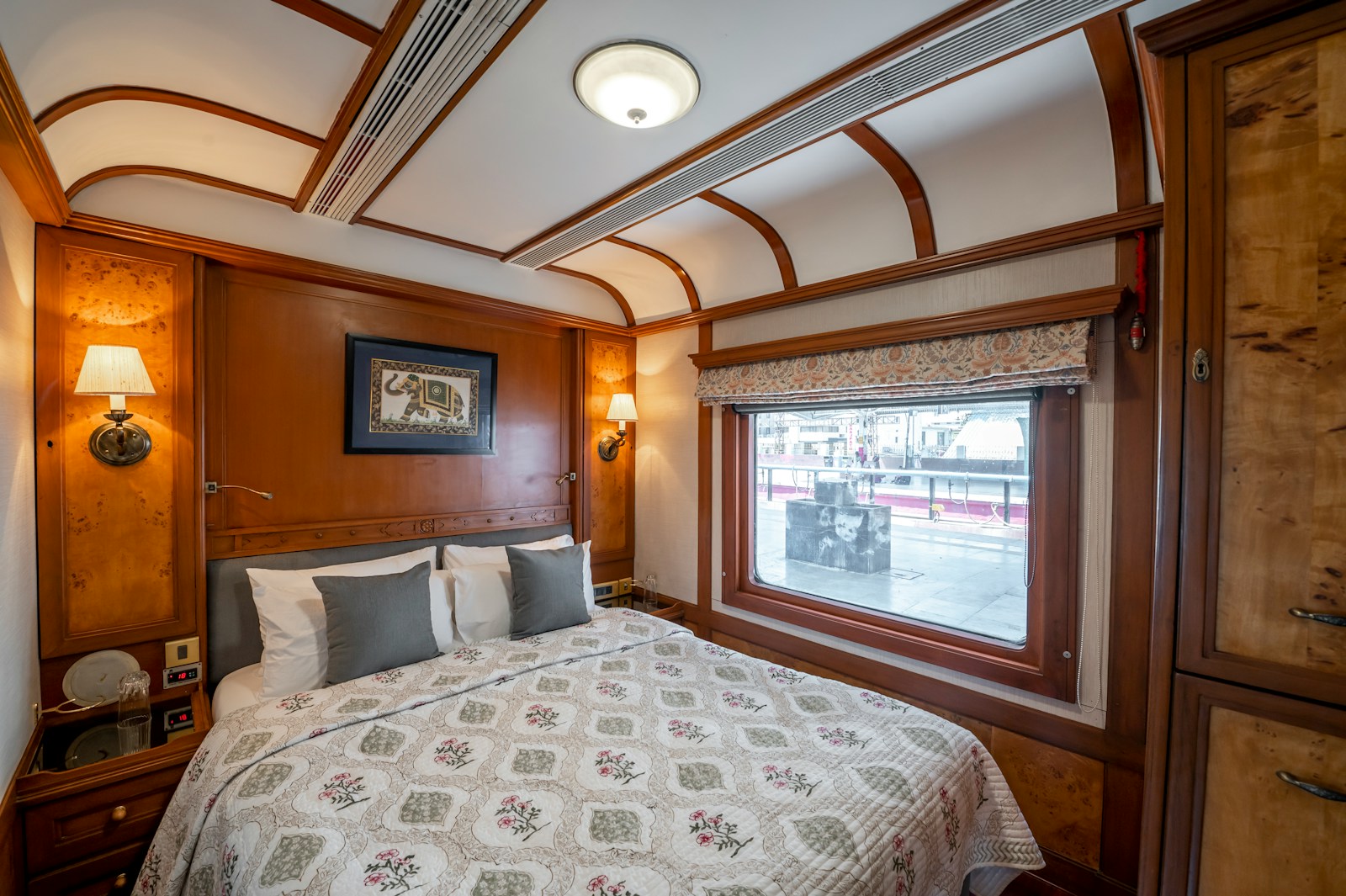
The Belmond Venice Simplon-Orient-Express is the train most travelers mean when they say « the Orient Express. » Its 17 period carriages, restored across decades and collectively listed as historic property, deliver an experience closer to an operating museum than a contemporary hotel-on-rails. The inlaid marquetry, the period glass by Lalique, the brass fittings and mahogany paneling – these are not reproductions. Three cabin categories operate: Historic Cabins (traditional compartments converting between day and night configuration), Suites (adjoining two cabins for day/night separation), and Grand Suites (the six signature suites added in 2018, each thematically designed to evoke a different city on the classic route).
The flagship Paris-Venice journey takes approximately 29 hours, overnight, with a day in the Austrian Alps. Rates for 2026 start near €3,900 per person for a Historic Cabin on a one-night trip, rise to €6,500-€9,000 for the Suites, and reach €18,000-€30,000 per person for the Grand Suites. The Paris-Istanbul journey, running once per season and covering six nights, is priced from €22,000 per person and sells out typically 12-14 months in advance.
Cuisine is the heart of the experience. The three dining cars – the Étoile du Nord, the Côte d’Azur, and the Anatolie – serve dinners that historically ran to five courses and in 2026 typically run to four, designed by a rotating cast of chefs with meaningful credentials. Dress code is formal at dinner, which the operator enforces with more warmth than Britannic stiffness – jacket and tie for men, appropriate equivalents for women, but the atmosphere is convivial rather than starched.
Orient Express La Dolce Vita (Accor)
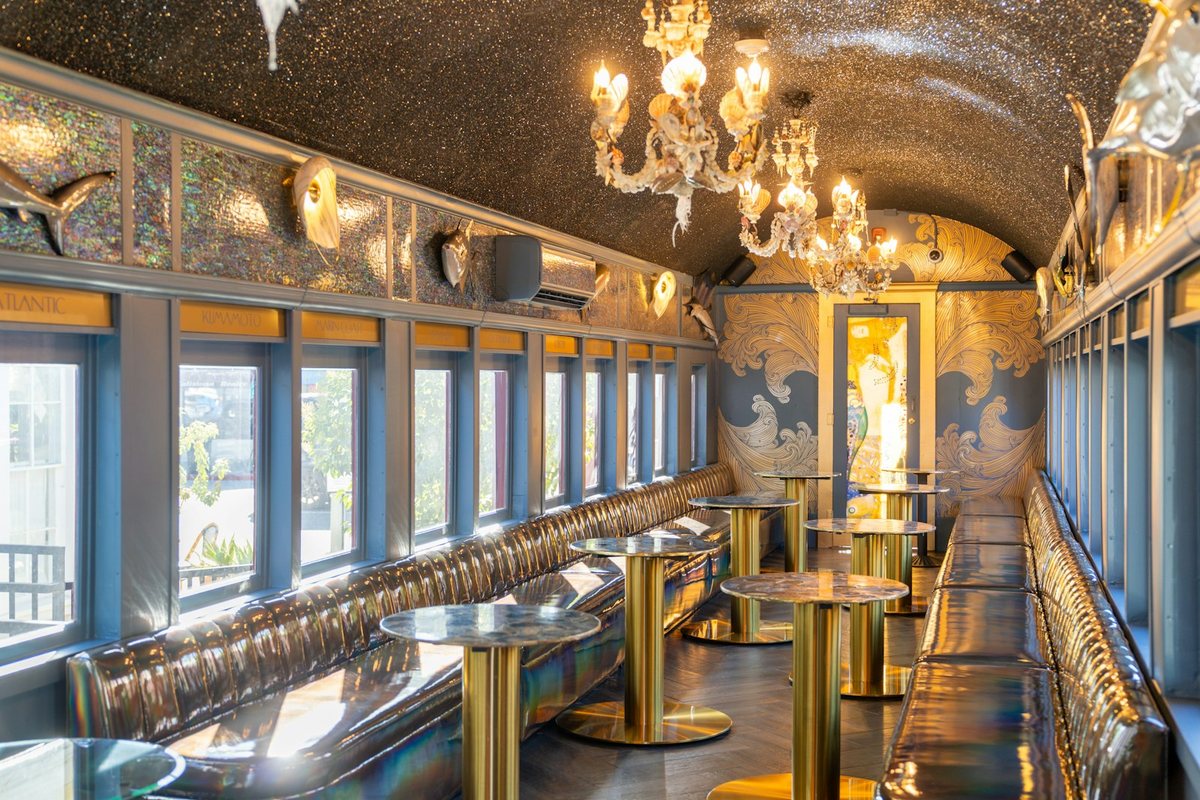
The Accor-operated Orient Express La Dolce Vita is the new entrant, launched to significant industry interest. Its carriages are contemporary – designed by architects Dimorestudio in what the press notes call « Italian midcentury modernism reinterpreted » – and its itineraries focus on Italy (Rome-Venice, Rome-Portofino, Rome-Matera, a Sicilian loop, and two longer routes). The product positions itself as the modern cousin to the Belmond heritage line, and its early reviews in Condé Nast Traveler and FT HTSI have been positive without being unreserved.
Rates for the two-night itineraries begin near €3,400 per person in Deluxe Cabins and reach €12,000+ in La Dolce Vita Suites. The cuisine is Italian-centric, with menus developed in consultation with named Italian chefs including Heinz Beck. The atmosphere is deliberately less formal than the Belmond line – elegant-casual rather than evening formal – which some travelers will find a welcome modernization and others a missed opportunity.
Belmond’s wider rail portfolio
Belmond, now part of LVMH since 2019, operates a rail portfolio that extends well beyond the Venice Simplon-Orient-Express. The portfolio matters because the parent quality of operations is consistent across the line, and travelers new to luxury rail often start with one of the shorter regional journeys before committing to the flagship.
Belmond British Pullman
The British Pullman operates day trips and short itineraries from London Victoria, using restored 1920s Pullman carriages. A typical day trip – to Bath, to the Garden Route, to a countryside lunch destination – runs £525-£800 per person. Its overnight and multi-night itineraries, often combined with onward Venice Simplon-Orient-Express journeys, add meaningful value. The Pullman is, among British luxury travel experiences, one of the few products that consistently overdelivers relative to its price.
Belmond Royal Scotsman
The Royal Scotsman runs 2-7 night itineraries through the Scottish Highlands, accommodating a maximum of 40 guests per departure in a small and intimate configuration. The aesthetic is country-house rather than Continental opulence: tartan, wood paneling, whisky menus, fireside dinners during the October shoulder weeks. Rates run £4,500-£17,000 per person depending on trip length. It is the most consistent off-peak performer in Belmond’s portfolio because Scottish weather works for rather than against the train’s atmosphere.
Belmond Andean Explorer
The Andean Explorer, operating between Cusco, Puno (Lake Titicaca), and Arequipa in Peru, is South America’s only true luxury sleeper train. At altitudes up to 4,400 m (14,435 ft) the journey includes supplemental oxygen and specific acclimatization protocols; the views across the altiplano genuinely have no European equivalent. Rates run $2,800-$5,200 per person for the two-night itineraries.
Belmond Eastern & Oriental Express
The Eastern & Oriental, connecting Singapore, Malaysia, and Thailand, resumed operations in 2024 after a pandemic-era pause and has relaunched with several new itineraries including the signature three-night Singapore-Bangkok route. Rates from $3,800 per person.
Rocky Mountaineer: the North American alternative
Rocky Mountaineer operates on a different premise than its European counterparts. It is a daylight-only train – guests sleep in hotels at overnight stops rather than on board – which fundamentally shifts the experience from a 24-hour luxury immersion to a sequence of day-long scenic rail journeys. This is not a deficiency; for a certain kind of traveler it is the explicit preference. It is also, structurally, why Rocky Mountaineer can offer such large observation-dome windows and such generous seating: the carriages do not need to convert into sleeping accommodation.
GoldLeaf and SilverLeaf
Two service classes operate across Rocky Mountaineer routes. GoldLeaf Service provides a bi-level dome carriage with an upper-level glass-dome observation deck and a lower-level dedicated dining area; meals are served seated at tables with full-service white-tablecloth dining. SilverLeaf Service provides single-level dome seating with meals served at the seat. The GoldLeaf experience is notably superior and worth the premium for most luxury travelers; in 2026 the gap runs approximately 40-60% in price between the two tiers.
Routes that matter
Four signature routes define Rocky Mountaineer. First Passage to the West (Vancouver-Kamloops-Banff) covers the Canadian Pacific’s historic route through the Canadian Rockies, including Kicking Horse Pass and the signature views through Glacier National Park. Journey Through the Clouds (Vancouver-Kamloops-Jasper) takes the alternative Canadian National route through different valley systems and past Mount Robson, the highest peak in the Canadian Rockies. Rainforest to Gold Rush (Vancouver-Whistler-Quesnel-Jasper) adds British Columbia’s interior. Rockies to the Red Rocks (Denver-Moab) is Rocky Mountaineer’s only U.S. route, which opened in 2021 and has settled into being the surprise sleeper hit of the company’s roster.
Rates for 2026 two-day rail itineraries (which typically become 4-8 day total trips with hotel extensions) run from approximately $1,800 to $4,500 per person depending on service class and route, before the hotel and excursion add-ons that are normally built into the booked package. Total package costs for a week-long Canadian Rockies experience typically reach $5,500-$9,500 per person.
Head-to-head: which journey for which traveler
The three operators target overlapping but distinct travelers. Summary:
- For the heritage experience, the architecture, the formal dinner at speed through Swiss mountains: Venice Simplon-Orient-Express. Nothing else in 2026 replicates the period authenticity.
- For Italian travel at a contemporary luxury standard: Orient Express La Dolce Vita. The itineraries are thoughtfully constructed and the Italy-specific content is excellent.
- For Scottish landscape with small-group intimacy: Belmond Royal Scotsman. Best off-peak value in the luxury rail category.
- For scenic daylight travel with generous seating and hotel nights: Rocky Mountaineer. The Canadian Rockies are the single most visually compelling scenic rail environment in North America.
- For the combination of culture, altitude, and landscape: Belmond Andean Explorer. Unique product with no direct competitor.
- For Southeast Asia’s distinctive tropical luxury: Eastern & Oriental Express. The newly revived route is worth the booking.
What to know before booking
Lead time
Peak Venice Simplon-Orient-Express Paris-Venice departures in summer 2026 were largely booked out by March 2025. The Paris-Istanbul single annual departure sold out fourteen months ahead. Rocky Mountaineer peak season (late May through late September) requires six to nine months lead time for GoldLeaf. La Dolce Vita’s more limited 2026 calendar has approximately half its inventory already committed. For the flagship luxury rail experiences the planning window is closer to 12-18 months than the 3-4 months typical of luxury hotels.
Single-traveler supplements
All three operators levy significant supplements for solo travelers, typically 70-100% of the double-occupancy rate. A limited number of designated solo cabins exist on some services (Belmond Royal Scotsman in particular) at lower premium, but availability is small.
Accessibility
Historic trains are, by their nature, not easily accessible to travelers with mobility limitations. The Venice Simplon-Orient-Express’s period carriages were not designed with step-free access and cannot be comprehensively retrofitted; the operator can accommodate some requirements with advance notice but cannot match the accessibility of modern hotel infrastructure. The contemporary Orient Express La Dolce Vita and Rocky Mountaineer fleets, built or refurbished to modern standards, are substantially more accessible.
Travel insurance and disruption
Rail disruption from weather, strikes, or infrastructure issues has grown meaningfully more common over the past five years. Luxury rail operators handle significant disruption well – the Belmond teams have a reputation for creative rerouting – but the traveler should carry insurance that covers trip interruption. The combined cost of a canceled itinerary can easily exceed €15,000-€30,000 per person once pre-booked hotels and transfers at destination are counted, and standard travel insurance does not always cover it.
What the next few years will bring
Several new luxury rail products are confirmed or in development for 2026-2028. Accor’s Orient Express La Dolce Vita is adding new routes. The Golden Eagle Trans-Siberian (currently not operating due to political conditions) remains uncertain. Japan’s Seven Stars in Kyushu continues to expand its inventory, with its successor the Shiki-shima running from Tokyo. The Maharajas’ Express in India continues to operate and has refurbished its fleet for the 2025-2026 season.
What will not change is the specific quality of long-distance rail travel at this level. The view changing slowly through the window, the reading of a book in a private cabin, the formality of dinner at a white tablecloth in a moving landscape, the particular suspension of ordinary time that a train journey produces. These are the reasons the product exists at the price it exists, and no faster mode of transport replicates them.
For further reading
Ongoing luxury rail coverage is strongest at FT HTSI, The New York Times Travel, and The Economist’s 1843 magazine. For the historic context of rail travel’s return, the BBC and Condé Nast Traveler archives are worth consulting.
For related long-form luxury travel pieces, see our guide to small-ship European cruising in 2026 and our piece on private villas in Greece, both of which frequently combine with luxury rail in extended itineraries.
A week on the Venice Simplon-Orient-Express, a week in a caldera villa, and a week on a small ship through the Greek islands is the kind of trip that advisors quietly build for their best clients each year. It is not the cheapest travel in the world; it may be, in aggregate, the most memorable.