
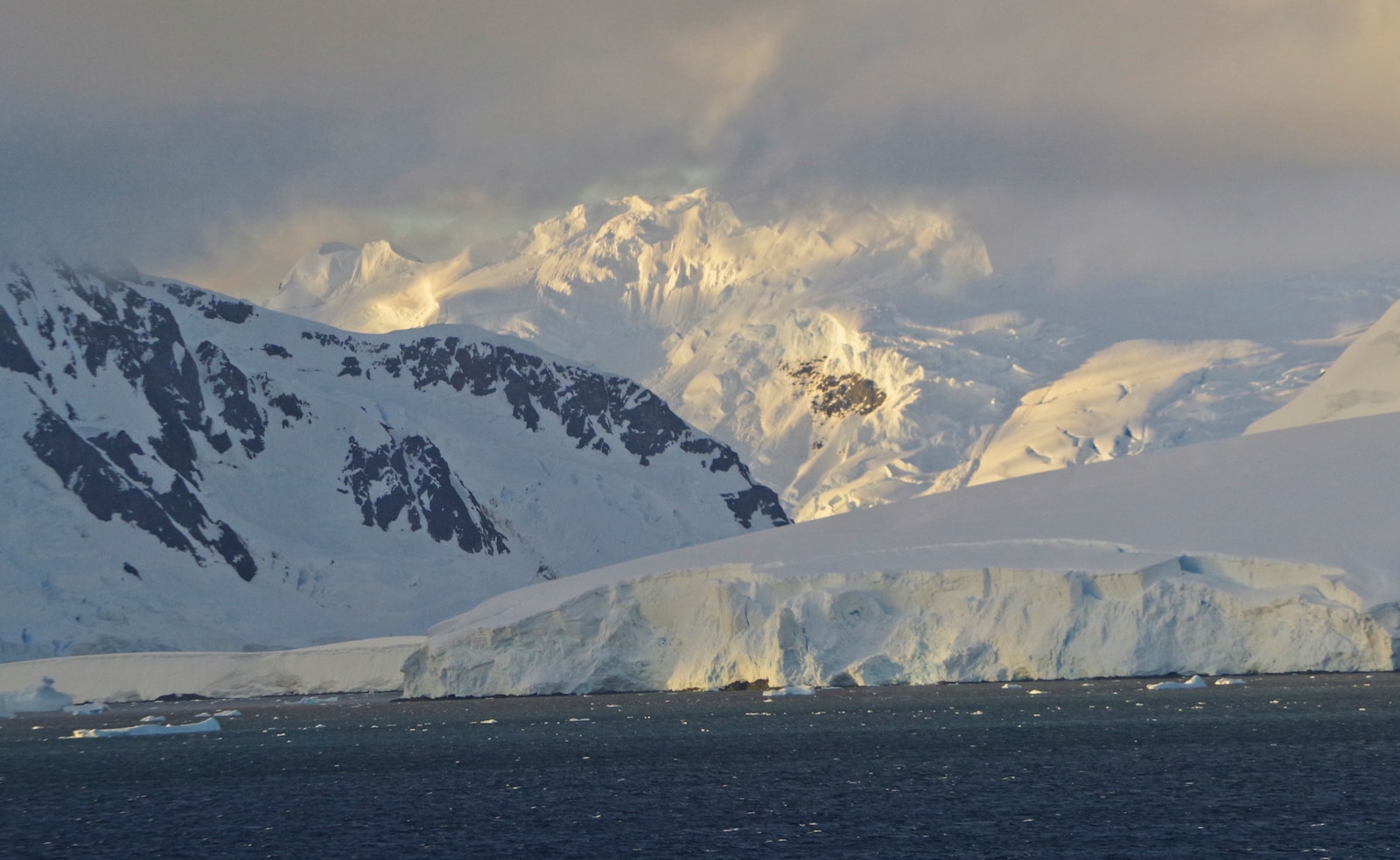
The Antarctic peninsula is unique among major travel destinations: there are no permanent residents, no commercial infrastructure ashore, no fixed accommodation beyond research stations, and the only practical way to visit is by ship. The ship effectively becomes the destination, with land excursions structured around the vessel’s daily anchorage points. The format is more demanding logistically than any tropical or polar cruise alternative, and the season is short: the operational window for the major operators runs from late October through early March, governed by sea ice and weather. Within that window, however, the choices have multiplied significantly. The 2026-27 season has the largest number of expedition vessels operating in the region in history.
This piece is a working guide to the Antarctic expedition cruise operators worth knowing about for the 2026-27 season, the differences between the major options, and the practical considerations of planning a trip that for most travellers represents a substantial financial and time commitment.
Why Antarctica is different from other expedition cruise destinations
Several features distinguish Antarctic expedition cruises from comparable destinations elsewhere. The first is the regulatory framework: the International Association of Antarctica Tour Operators (IAATO) coordinates a strict operating regime that limits vessel numbers at landing sites, requires biosecurity protocols for boots and outerwear, and caps total daily visitors per landing. The 2024-25 season saw approximately 105,000 visitors to the region, and IAATO continues to manage volume against ecosystem capacity.
The second is the requirement for ice-class vessels. Most Antarctic operators use ships rated to Polar Class 6 or higher (with several Polar Class 5 and Polar Class 2 vessels in service for more demanding operations), and these vessels are substantially more expensive to operate than equivalent-size cruise ships in temperate waters. The capital cost flows through to passenger rates.
The third is the Drake Passage, the body of water between Cape Horn and the Antarctic peninsula that virtually all sea-based itineraries cross twice. The Drake is one of the world’s most consistently rough sea passages, with substantial swells common across roughly 70 percent of crossings during the operating season. The two-day Drake crossing each direction shapes the itinerary structure of most operators.
The fly-cruise alternative
The most significant operational innovation in Antarctic cruising over the past decade has been the development of fly-cruise programmes that bypass the Drake Passage. Travellers fly from Punta Arenas in southern Chile to King George Island, where a small airstrip near the Russian-Chilean Frei Station accepts BAe-146 jets and similar aircraft. The flight is approximately two hours, and travellers board their expedition ship directly from the airstrip.
The fly-cruise option saves four days of total travel time (two days each direction across the Drake) at the cost of weather risk: the King George Island flights are subject to substantial cancellation due to fog and crosswinds, and travellers may be delayed for one or several days at either end. The fly-cruise rates are typically 2,000 to 5,000 USD per person above the equivalent sea-only itinerary.
The major fly-cruise operators include Antarctica21 (which essentially pioneered the format), Silversea, Aurora Expeditions, Atlas Ocean Voyages and Hurtigruten. The combination of fly-cruise convenience and the substantial difficulty of the Drake makes the format the preferred choice for time-constrained travellers and for those for whom rough seas are a significant concern.
The luxury operators
Three operators occupy the upper tier of the Antarctic expedition cruise market in 2026-27.
Silversea
Silversea operates several vessels in Antarctica including the Silver Endeavour (Polar Class 6, 200-passenger capacity) and the smaller Silver Cloud. The Silver Endeavour, which entered service in 2022, is the most recently built dedicated expedition ship in the Silversea fleet and runs a particularly polished operation. Silversea offers both fly-cruise and traditional Drake Passage itineraries.
Silversea rates for Antarctica typically run 18,000 to 40,000 USD per person for an eleven-night itinerary, depending on cabin category and timing. The operation is notably comprehensive: butler service across all cabin categories, multiple dining venues, and a particularly substantial expedition team relative to passenger count.
Ponant
Ponant, the French luxury expedition operator, runs several vessels in Antarctica including the polar-rated Le Commandant Charcot — the world’s first hybrid-electric Polar Class 2 luxury vessel, capable of operating in heavier sea ice than any other cruise vessel in the region. Le Commandant Charcot is the only commercial cruise ship that regularly reaches the Geographic South Pole side of the continent (via the Ross Sea region) and operates an extended Antarctic season including some February departures into the Weddell Sea.
Ponant’s standard Antarctic peninsula cruises run on the L’Austral, Le Boréal, Le Lyrial and Le Soléal ships — Polar Class 6 vessels with 184-passenger capacity. Rates for the standard peninsula itinerary run approximately 15,000 to 35,000 USD per person; Le Commandant Charcot itineraries run substantially higher, often 35,000 to 80,000 USD per person depending on length and route.
Scenic Eclipse and Seabourn
Scenic Eclipse and Seabourn Venture both operate Antarctic itineraries in similar luxury segments. Both ships offer submersibles for limited use in Antarctic waters (subject to operational conditions), helicopters for occasional use as transport and observation platforms, and small-group expedition operations.
The expedition specialists
A second tier of operators positions itself between standard cruise lines and the luxury operations, offering serious expedition operations at moderately lower price points.
Aurora Expeditions
Aurora Expeditions, the Australian-based operator, runs the Greg Mortimer and Sylvia Earle ships in Antarctica. Both are Polar Class 6 vessels with 132 to 140 passenger capacity. Aurora’s positioning emphasises the expedition content (lectures, citizen science programmes, photography) over hospitality elaborateness, while still providing comfortable cabins and good dining. Rates run approximately 10,000 to 25,000 USD per person.
Lindblad Expeditions / National Geographic
Lindblad operates the National Geographic Endurance and National Geographic Resolution in Antarctica, both Polar Class 5 vessels with 126-passenger capacity. The National Geographic affiliation produces particularly strong photography programming and natural-history content. Several of Lindblad’s senior expedition leaders have decades of Antarctic experience and the operation has the deepest institutional knowledge of the region of any operator.
Hurtigruten Expeditions
Hurtigruten, the Norwegian operator with the longest continuous polar operations history, runs the MS Roald Amundsen and MS Fridtjof Nansen in Antarctica. Both are hybrid-electric vessels with substantial battery capacity that allows reduced-emission operation in sensitive areas. Hurtigruten rates are at the lower end of serious Antarctic operators, typically 8,000 to 18,000 USD per person.
Itinerary types
Most Antarctic itineraries fall into one of several categories. The shorter peninsula itineraries (10 to 12 nights total, including Drake crossings) cover the western Antarctic peninsula and the South Shetland Islands. These are the most-visited and most-photographed regions: Lemaire Channel, Paradise Bay, Neko Harbour, Deception Island, Cuverville and Petermann Islands.
The longer « Antarctic Circle crossing » itineraries extend further south, with passage south of latitude 66°33′S. These itineraries typically run 14 to 18 nights and require somewhat better ice conditions. The Antarctic Circle itineraries appeal particularly to travellers wanting to visit the actual continent rather than only the peninsula’s offshore islands.
The most ambitious itineraries combine Antarctica with South Georgia and the Falkland Islands, typically running 21 nights or more. South Georgia is widely considered the most spectacular wildlife destination in the entire region, with massive king penguin colonies and large elephant seal aggregations. The combined itineraries are substantially more expensive than peninsula-only trips, often 25,000 to 60,000 USD per person, but produce a substantially deeper experience.
The Ross Sea and East Antarctic itineraries, accessible only on Le Commandant Charcot and a small number of other Polar Class 2 vessels, represent the most adventurous extended option, with itineraries of 22 to 28 nights and rates from approximately 50,000 USD upward.
What the experience actually involves
A typical Antarctic peninsula day on a serious expedition operation includes two excursions: one in the morning, one in the afternoon, weather and ice permitting. Excursions are usually Zodiac landings (small inflatable boats carrying ten to twelve passengers each) at penguin colonies, scenic Zodiac cruises through iceberg fields, occasional kayak excursions for travellers who have signed up for those programmes, and sometimes camping ashore (limited and typically only on the most expedition-focused operations).
The remaining time on the ship combines lectures by the expedition team (typically including biologists, glaciologists, photographers and historians), wildlife observation from the bridge or open decks, dining and rest. The pace is slower than land-based luxury travel, and the rhythm of the day is shaped by ice and weather rather than by a fixed schedule.
What to know before booking
Several practical considerations shape how Antarctic travellers should plan:
- Book substantially in advance. The most desirable departures and cabins on luxury vessels often sell out twelve to eighteen months ahead.
- Buy comprehensive travel insurance including evacuation cover. Medical evacuation from Antarctica is exceptionally expensive and essentially uninsurable on a per-incident basis.
- Plan for weather flexibility. Itineraries change in real time based on ice and weather; operators that publish daily schedules in advance are usually overpromising.
- Bring proper gear. Most operators provide parka and boots; layering, waterproof trousers and warm gloves are typically the traveller’s responsibility.
- Consider seasickness preparation. The Drake Passage is genuinely difficult; consult a doctor before the trip about appropriate prevention.
Wildlife: what travellers actually see
The wildlife experience in Antarctica is one of the most reliable elements of any expedition cruise, and understanding what is realistically observable helps set expectations. Penguin colonies are the most consistent feature: gentoo, chinstrap and Adélie penguin colonies are present at almost every peninsula landing site, with colony sizes ranging from a few hundred breeding pairs at smaller sites to tens of thousands at the major colonies on Cuverville Island, Brown Bluff and Devil Island.
Seal sightings are similarly frequent. Crabeater seals (the most abundant pinniped species in the world, despite the name) are typically seen on ice floes on most peninsula days. Weddell seals are common in the more sheltered bays. Leopard seals, larger and more menacing in appearance, are seen less frequently but produce particularly dramatic encounters when spotted. Elephant seals are concentrated on South Georgia rather than the peninsula proper, with some smaller breeding aggregations at peninsula sites.
Whale sightings are a major attraction. Humpback whales, returning to peninsula waters to feed during the southern summer, are increasingly common with breach and lunge feeding observable from many ship positions. Minke whales are also regularly observed. Orca sightings are less frequent but produce some of the most memorable wildlife encounters of any Antarctic trip. The 2022 to 2024 seasons saw substantially elevated whale numbers across the peninsula, with researchers including the Antarctic Whale Project documenting record sighting rates.
South Georgia, when included in the itinerary, is in a wildlife class of its own. The king penguin colony at Salisbury Plain contains approximately 250,000 breeding pairs in a single dense aggregation. The elephant seal beaches in October and November host substantial breeding aggregations with continuous male-male combat. The fur seal recovery, with population growth from a near-extinction baseline in the 1950s to estimated current populations of 4 to 5 million, represents one of the most successful marine mammal recoveries in modern conservation history.
The carbon footprint question
Antarctic cruise tourism has produced substantial debate about environmental costs. The per-passenger carbon footprint of an Antarctic expedition is genuinely high — typical estimates range from 5 to 12 tonnes of CO2 equivalent per person across the full journey, including international flights to South America, ship operations and excursions. The figure is several times the per-passenger footprint of a typical European city break.
The industry has responded with several interventions. Hurtigruten and Ponant have invested in hybrid-electric propulsion that reduces in-region emissions, with battery operation possible during landings and approach phases. IAATO has established mandatory environmental standards for participating operators, including ballast water exchange protocols, biosecurity measures and waste handling. Several operators offer or require carbon offsetting programmes, though the scientific consensus on offset effectiveness remains mixed.
For travellers weighing the environmental cost, the honest framing is that Antarctic tourism is a high-impact form of travel that supports conservation funding, generates support for Antarctic environmental protection through traveller advocacy, and provides scientifically meaningful opportunities through the citizen-science programmes some operators run. The trade-off is genuine and not entirely resolvable; the case for or against the trip depends on the individual traveller’s specific weighting of these factors.
Misconceptions about Antarctic travel
Several common misconceptions about Antarctic cruising deserve correction. The first is that the cruises require expedition-level fitness. Most peninsula itineraries are accessible to reasonably mobile travellers; the Zodiac landings involve stepping in and out of small boats and walking on uneven snow and rocky terrain, but the level of physical demand is moderate rather than expedition-grade. Travellers with significant mobility limitations should discuss with operators in advance, but most ships are equipped to accommodate at least observation-only participation for less mobile guests.
The second misconception is that all Antarctic operators provide similar experiences. They do not. The Polar Class rating of the vessel matters substantially for what regions can be reached. The expedition team’s depth and continuity affect the quality of guidance and lectures. The ship’s design (passenger capacity, public spaces, expedition launch infrastructure) shapes the daily rhythm. Travellers comparing operators on price alone often discover that the price difference reflects substantive operational differences.
The third is that the Drake Passage is uniformly miserable. The « Drake shake » reputation is somewhat overstated. Approximately 30 percent of crossings are relatively calm (« Drake lake »), 40 percent are moderately rough, and 30 percent are genuinely difficult. Most modern stabiliser systems on luxury vessels handle the typical conditions well. Seasickness preparation, including patches and tablets prescribed by a doctor, mitigates the discomfort effectively for most travellers.
The fourth misconception is that Antarctic travel is exclusively a winter destination. The southern hemisphere reverses the season; the Antarctic operating period runs from late October (the southern spring) through early March (the southern autumn). The ambient temperatures during the peninsula season range from approximately minus five to plus five degrees Celsius, which is comparable to a moderate northern European autumn rather than to extreme polar conditions.
Practical packing and preparation
For travellers preparing for an Antarctic cruise, the practical preparation list is more substantial than for most travel destinations. Most operators provide a parka and waterproof boots for the duration of the voyage, but the traveller is responsible for the rest of the layered clothing system. The recommended layering approach involves: a thermal base layer (merino or technical synthetic), a mid-weight insulating layer (fleece or down), a windproof and waterproof outer layer, waterproof trousers, warm gloves with a thinner liner glove for camera operation, a wool hat, a buff or neck gaiter, and warm socks.
Camera equipment requires particular preparation. The cold reduces battery life dramatically; spare batteries kept in inner pockets are essential. Lens condensation when moving from cold to warm air is a recurring problem; using sealed plastic bags during transitions helps. Most expedition photographers carry two camera bodies to avoid lens-changing in cold and wet conditions, and use telephoto zoom lenses (70-200mm or 100-400mm) for wildlife photography from Zodiacs and ship decks.
Documents and travel insurance require advance attention. Antarctica has no immigration formalities, but the launch port (typically Ushuaia in Argentina or Punta Arenas in Chile) requires standard visa and passport conditions. Travel insurance with explicit Antarctic coverage and high evacuation limits (1 to 2 million USD recommended) is essential because medical evacuation costs from the region can exceed standard policy limits.
Further reading
The Wikipedia entry on Antarctic tourism provides regulatory and historical context. The International Association of Antarctica Tour Operators publishes detailed visitor guidelines and operator information. The British Antarctic Survey publishes scientific research and educational material on Antarctic ecology and climate, useful background reading before any visit. Our archive on cruise itineraries is at croisières & itinéraires, with broader destination material at destinations d’exception, and a separate thread on polar travel covering Arctic operations alongside the Antarctic season.
This article is for informational purposes; cruise operations, ice conditions and regulatory requirements change continuously, so verify current information directly with operators before booking.
