
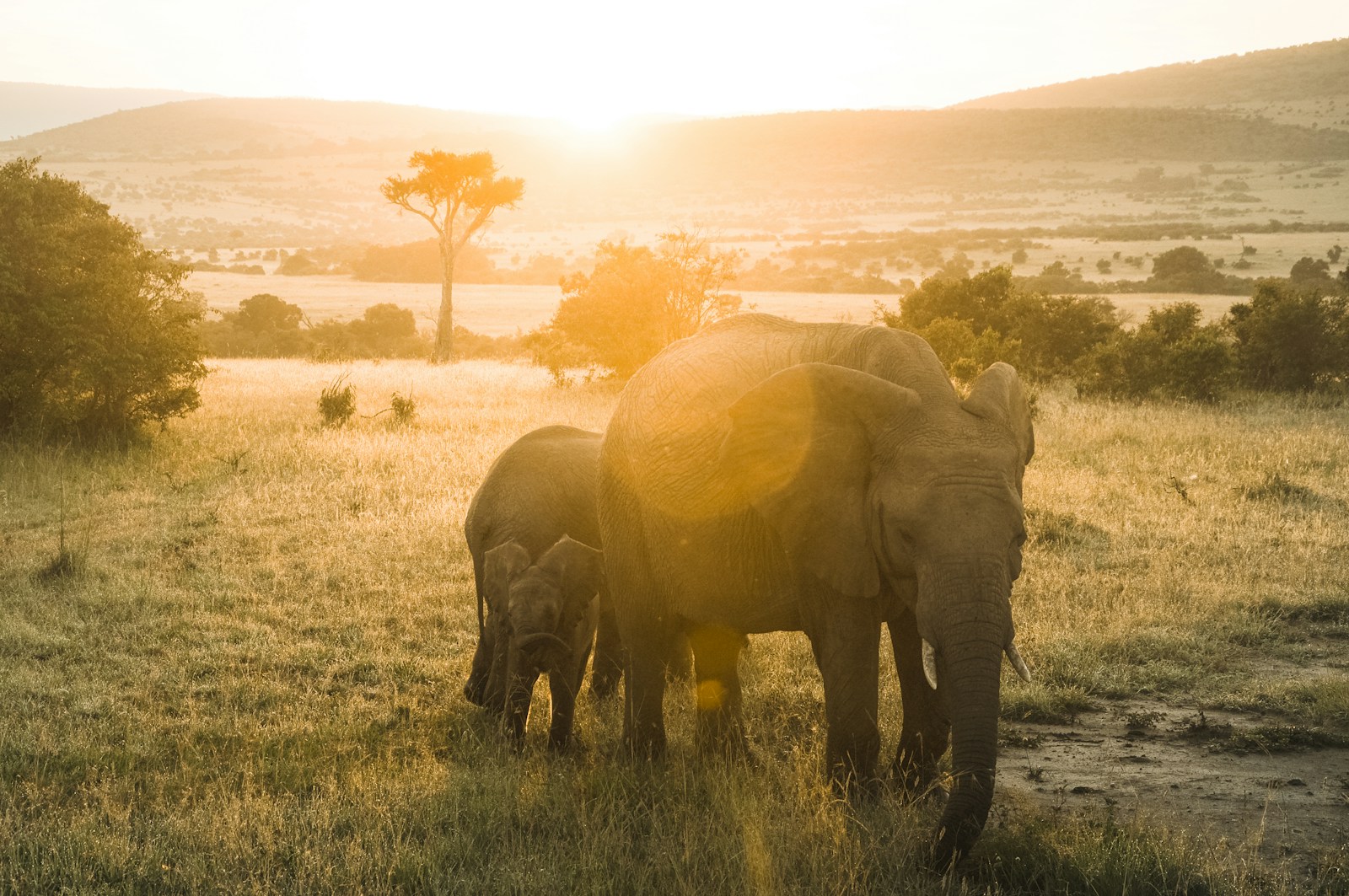
The first tented camp I stayed at, on the Linyanti floodplain in northern Botswana in 2014, was an honest object lesson in what the format actually delivers. The « tent » was a permanent canvas-walled structure with a hardwood deck, fully plumbed bathroom, four-poster bed and air conditioning. The wildlife was meaningfully closer than at any conventional lodge: elephants drank from a pool ten metres from my deck on the second morning. The guide was a senior Motswana naturalist who had grown up in the Okavango ecosystem and could read the landscape at a level no foreign visitor could match. The combination — comfort indistinguishable from a five-star hotel, wildlife immediately present, and guiding from someone who genuinely knew the place — is the operational core of what the African luxury tented camp does well.
This piece is a working map of the major operators and properties across sub-Saharan Africa as the format stands in 2026. The aim is practical: which camps suit which kinds of trips, how the major operators compare, and what to know before booking what is for most travellers a substantial financial commitment.
The major operators
Five operating groups dominate the sub-Saharan luxury tented camp segment, each with somewhat different positioning. Most travellers’ decisions involve choosing among them or between them and a small number of independent properties.
Singita
Singita, headquartered in South Africa, runs fifteen camps across South Africa, Tanzania, Zimbabwe and Rwanda, with a sixteenth in development in Mozambique. The operator was founded by Luke Bailes in 1993 and has consistently set the upper boundary for luxury tented camp hospitality across the continent. Singita’s properties are uniformly distinctive in design (each property by a different leading architect or design studio) and uniformly committed to conservation: more than 90 percent of staff are recruited from local communities, and the company contributes meaningfully to wildlife protection programmes in each region where it operates.
Singita rates are at the upper end of the African luxury market, typically 3,000 to 6,000 USD per person per night all-inclusive, with the premium private villas running considerably higher. The camp design is sufficiently varied that travellers often visit multiple Singita properties on a single trip — Sabi Sand for predator densities, the Serengeti for the wildebeest migration, the Pamushana property in Zimbabwe for relative privacy.
Wilderness (formerly Wilderness Safaris)
Wilderness operates more than 60 camps across nine African countries, making it the largest single luxury safari operator on the continent. The operator’s flagship properties are concentrated in Botswana (where the company started), with substantial operations in Namibia, Zambia, Zimbabwe and Kenya.
The Wilderness portfolio runs across price points from approximately 800 USD per person per night for entry-level camps up to several thousand USD for the flagship operations like Mombo, Vumbura Plains, and Little Mombo in the Okavango. The sheer geographic depth of the portfolio makes Wilderness the natural starting point for a multi-country southern Africa itinerary.
andBeyond
andBeyond operates 29 lodges across Africa, with notable concentrations in South Africa, Tanzania and Botswana. The operator was founded in 1991 by Conservation Corporation Africa and shifted to its current name in 2005. andBeyond’s positioning emphasises broader experiential travel — not only safaris but also archaeological sites, cultural visits and beach extensions — and the operator has developed substantial expertise in multi-country itineraries.
The Tanzania portfolio (andBeyond Klein’s Camp, Bateleur, Grumeti) is particularly strong, with several camps located along key migration routes in the Serengeti ecosystem.
Great Plains Conservation
Great Plains, founded by filmmakers Beverly and Dereck Joubert, runs camps in Botswana and Kenya with a particular emphasis on conservation programming alongside hospitality. The portfolio is smaller than Singita or Wilderness (about a dozen properties) and the camps are typically very small (six to twelve tents) for the level of privacy and personalisation this allows.
Mara Plains and Mara Nyika in Kenya, and Selinda Camp in Botswana, are the most established Great Plains properties. Rates are at the upper end of the market, with the smaller scale supporting per-tent rates of 2,500 to 5,000 USD per person.
Asilia Africa
Asilia operates 19 camps across Tanzania, Kenya and Zanzibar, and has developed particular expertise in mobile camps that follow the Serengeti migration. The operator’s positioning is somewhat lighter on the formal luxury elements than the larger groups but offers substantial wildlife access at slightly more accessible price points.
Botswana: the highest-density luxury safari country
Botswana has been the most consistently sophisticated luxury safari destination in Africa for the past three decades, partly because of the country’s high-cost-low-volume tourism policy that limits visitor numbers in major reserves. The Okavango Delta is the centrepiece, with the Linyanti, Selinda and Chobe ecosystems extending the option set.
The most established luxury Okavango camps include Mombo (the Wilderness flagship, recently rebuilt), Vumbura Plains, Jao, Kings Pool, and the Great Plains Duba Plains. Each occupies a distinct concession with different ecosystem characteristics. Most multi-camp Okavango itineraries combine a water-based camp (where mokoro canoe excursions are central) with a drier camp focused on game drives.
The 2025 reopening of Wilderness Mombo after rebuilding represents the latest iteration of one of the longest-running luxury safari camps. The new structure was designed in collaboration with architect Helen Stell and is intended to operate at a substantially lower environmental impact than the previous structure.
Tanzania and Kenya: the migration ecosystems
The Serengeti-Mara ecosystem, supporting the wildebeest migration of approximately 1.5 million animals across the Tanzanian and Kenyan border each year, is the single most-visited safari ecosystem in Africa. Luxury camps cluster at the migration’s predictable points: the Mara River crossings (typically July through October), the Ndutu calving grounds in southern Tanzania (January through March), and the western Serengeti corridor.
The Tanzanian side has more concentrated luxury operations, with Singita Grumeti, andBeyond Grumeti, Asilia’s Sayari and the various Wilderness Tanzania camps providing dense coverage. The Kenyan side is dominated by smaller operators including Great Plains’ Mara properties, Saruni Mara and the Cottar’s 1920s Camp.
Mobile camp operations, where the camp itself is dismantled and moved every few weeks to follow the migration, are increasingly available. Asilia’s Olakira is the most established mobile operation, with seasonal locations across the Serengeti.
South Africa: the predator-density premium
South Africa’s Sabi Sand reserve, adjacent to Kruger National Park, has the highest predator densities of any commercial safari destination on the continent. Leopard sightings, in particular, are essentially daily across most of the year. The Sabi Sand camps include Singita Boulders, Singita Ebony, Londolozi, Lion Sands, Sabi Sabi and the Royal Malewane group.
The MalaMala reserve, slightly larger than the Sabi Sand and operating with somewhat different traffic management, also supports several luxury operations. The 2023 reopening of Tswalu Kalahari after extensive rebuilding marked the major South African luxury camp event of recent years; Tswalu’s location in the southern Kalahari supports a different (and rarer) ecosystem mix than the bushveld camps.
The lesser-known luxury destinations
Several sub-Saharan destinations have substantial luxury safari operations that receive less international attention than the Botswana-South Africa-Tanzania-Kenya core.
Zambia has the South Luangwa and Lower Zambezi national parks, with operators including Chinzombo, Time + Tide, and Norman Carr Safaris. South Luangwa is particularly known for walking safaris, a format that pioneered there and remains the destination’s signature offering.
Zimbabwe has Hwange National Park (with Singita Pamushana, Wilderness’s Davison’s, and the Bomani group) and the Mana Pools National Park (with various small operators). The country’s safari operations have rebounded substantially since the period of greater political instability.
Rwanda has emerged as a mid-priced gorilla trekking destination with luxury options including Singita Kwitonda Lodge, Bisate Lodge (Wilderness), and One&Only Gorilla’s Nest. The gorilla permit fee (currently 1,500 USD per person per trekking day) sets a substantial floor on the trip cost.
Namibia offers a different format entirely — desert and dry-country properties focused on the Skeleton Coast, Sossusvlei, and Damaraland — with operators including Wilderness Sossusvlei, Hoanib Skeleton Coast, and the Onguma group.
Planning considerations
Several practical considerations shape safari trip planning. The minimum useful trip length is approximately seven to ten nights on the ground, which typically includes two camps in two different ecosystems. Single-camp safaris are increasingly rare among committed safari travellers because the variety of ecosystems is itself one of the experience’s strongest features.
The seasonal timing matters substantially. The migration windows in the Serengeti-Mara are well documented (river crossings July-October, calving January-March, transit periods in between). The Okavango is at its most visually dramatic when flooded, typically June through September. Many camps have lower-rate « green seasons » during the rainy months that offer good wildlife viewing at lower cost, with the trade-off of less vehicle access in some areas.
The cost is substantial. A ten-night sub-Saharan luxury safari at the established camps typically runs between 15,000 and 50,000 USD per person, including international flights, internal flights (which are essential and expensive in many regions), camp rates, and incidentals. Trips below this range usually involve mid-tier rather than upper-tier camps; trips above this range often include private aircraft or particularly remote properties.
Working with specialist agents
The complexity of multi-camp safari itineraries makes specialist travel agents particularly valuable. The most experienced operators include Roar Africa, Extraordinary Journeys, Africa Adventure Consultants and several smaller specialists. These agents typically charge no fee to the traveller (the camps pay them through standard commission structures) and can usually negotiate camp upgrades, additional services and itinerary adjustments that direct booking does not produce.
The conservation contribution of luxury safari operators
The luxury safari operators contribute meaningfully to conservation funding across sub-Saharan Africa, and the structure of that contribution is worth understanding. Most major operators allocate a significant share of their revenue to conservation programmes, either through direct contributions to land lease fees, anti-poaching infrastructure, community development programmes or affiliated foundations. The model has produced documented conservation outcomes that policy-driven approaches alone have not consistently delivered.
Singita’s conservation contribution runs through the Singita Lowveld Trust and similar regional foundations, which support specific anti-poaching and habitat-restoration projects across the operator’s concessions. The 2019 to 2024 trust report documented annual contributions of approximately 6 million USD across the company’s regions of operation, supporting wildlife veterinary services, community education programmes and habitat protection. Wilderness operates the Wilderness Wildlife Trust on similar lines, with particular concentration on Botswana’s elephant population and Zambia’s predator monitoring.
The Great Plains Foundation, founded by the Joubert family alongside the Great Plains Conservation operator, has been particularly visible in elephant translocation projects. The 2022 to 2024 « Project Ranthambhore » relocation of approximately 250 elephants from over-stressed habitat in southeastern Africa to under-populated reserves in Mozambique was substantially funded by Great Plains’ guest revenue and demonstrated what private safari operators can contribute to landscape-scale conservation. The operator publishes annual reports on these contributions, available through its corporate website.
For travellers interested in adding a conservation dimension to their trip, several operators offer extended programmes that include guided participation in conservation activity — wildlife collaring projects, anti-poaching patrols, community education visits — alongside the standard game viewing. Singita’s « Grumeti Fund » programme and the Wilderness « Children in the Wilderness » programme are the most established of these.
Misconceptions about luxury safari travel
Several persistent misconceptions deserve correction. The first is that luxury tented camps are inherently less authentic than budget safari operations. The opposite is closer to the truth in most regions. Budget operations frequently rely on day-trip game drives in heavily visited national parks, while luxury camps typically operate in private concessions with substantially lower visitor density and access to areas that day-trippers cannot reach. The « authenticity » gap, in terms of wildlife viewing depth, generally favours the luxury operations.
The second misconception is that off-season « green season » travel produces inferior safari experiences. Several regions are at their best during traditionally less-visited months. Botswana’s Okavango is most visually dramatic during peak flood (June to September), but predator viewing in the same region is often best during the drier months on either side. Tanzania’s southern circuit (Selous, Ruaha) is generally best during the dry season but supports excellent green-season birding and predator activity. The most experienced repeat safari travellers often deliberately schedule trips outside peak windows for the lower visitor density.
The third misconception is that luxury safari operators are interchangeable. They are not. The differences in guiding tradition, camp culture, conservation philosophy and design approach across Singita, Wilderness, andBeyond, Great Plains and the smaller operators are substantial. Repeat safari travellers typically develop strong preferences and continue with one or two operators across decades. First-time travellers benefit from working with specialist agents who can match operator culture to traveller expectations.
The fourth is that the most expensive camps automatically produce the best experiences. They do not, consistently. Several mid-priced operations (the Asilia properties, parts of the Wilderness portfolio, the smaller Kenyan operators) produce safari experiences of comparable quality to the highest-priced flagship camps, with the savings going into longer trip duration or additional camps. Cost-per-night is a less reliable indicator of experience quality than the depth of the guiding team and the specific concession’s wildlife density.
The integration with broader African travel
Increasingly, luxury safari trips are integrated with broader African travel programmes that include cultural, archaeological and beach destinations. The combinations that have worked well across recent years include: Tanzania safari plus Zanzibar beach extension; Botswana safari plus Cape Town and the Cape Winelands; Kenya safari plus Lamu coastal extension; Rwanda gorilla trekking plus Kenya safari; and South Africa multi-region itineraries combining Kruger area with Cape Town and the Garden Route.
The integration adds complexity but produces more varied trips and frequently better cost efficiency than two separate trips. The major safari specialist agents are typically equipped to plan combined itineraries, and several operators (andBeyond in particular) have built substantial expertise in multi-element African travel. The 2024 launch of new lodges including andBeyond Punakha River Lodge in Bhutan and the planned andBeyond Tswalu expansion suggest that the luxury safari operators are actively building beyond pure safari positioning.
What recent travellers actually report
Among the dozens of repeat safari travellers I have spoken to over the past several years, certain patterns emerge consistently. The Mara River crossings during the migration are the single most-mentioned wildlife experience, though the unpredictability of the actual crossings (which can occur over a window of several weeks but at unpredictable times within that window) means that even multi-week safaris sometimes miss the headline crossings. Predator sightings, particularly leopards in the Sabi Sand and lions in the Serengeti, are mentioned more consistently, with sighting frequency at flagship camps approaching daily or near-daily during peak season.
The guiding quality is the single most-cited differentiator across operators. Travellers consistently describe specific guides by name even years after the trip, and the strength of the guide team is the factor most likely to determine whether a traveller returns to a specific operator. Singita’s investment in long-term guide retention, with several guides at the company for fifteen or twenty years, is widely credited with the consistency of the company’s safari experience.
The food and hospitality elements of safari camps have improved substantially since 2010 and now genuinely compare with the best urban hospitality. The dining at the flagship Singita, Great Plains and Wilderness camps is reliably at three-star urban restaurant level, with substantial sourcing from regional producers and the on-site farms that several operators now run. The wine programmes, particularly at the South African camps, are exceptional given the geographic context.
Further reading
The Wikipedia entry on safari travel provides broader historical context. The International Union for Conservation of Nature publishes detailed conservation status information for the major safari ecosystems. The National Geographic long-form coverage of African wildlife and conservation includes substantial photography and reporting from the regions covered by the major safari operators. Our archive on remote luxury destinations is at destinations d’exception, with broader hotel coverage at hôtels & retraites de luxe, and a separate thread on conservation travel covering rewilding and biodiversity programmes.
This article is for informational purposes; safari camp operations, rates and political conditions in source countries change, so verify current information with operators or specialist agents before booking.