
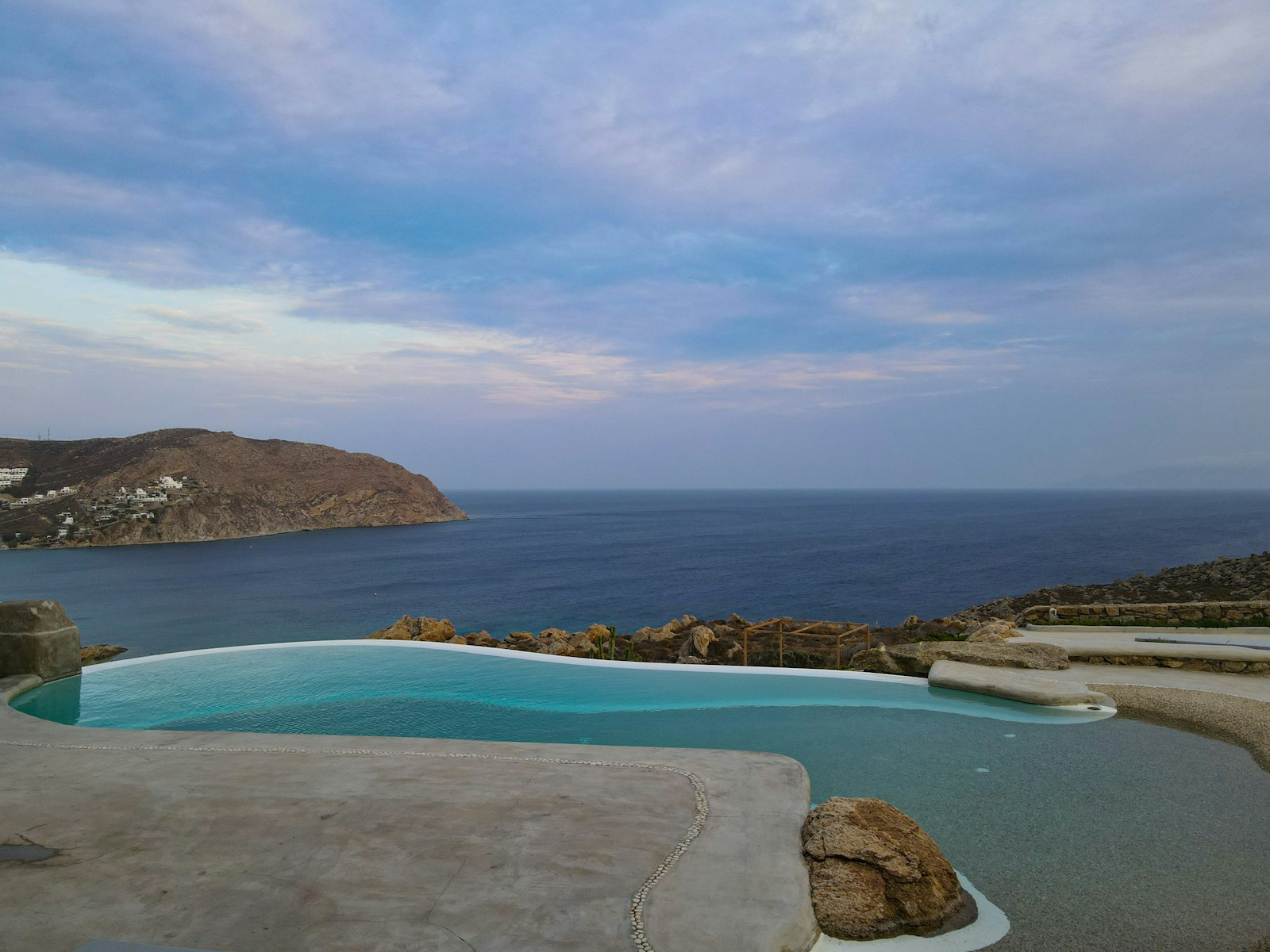
August 2025 was the first summer in which the Cycladic private villa market in Greece reached, by the reckoning of the luxury agencies operating it, something approaching true parity with its French and Italian equivalents. Rates at the top end – the clifftop villas of Santorini’s Oia caldera, the six-bedroom compounds above Mykonos’s Agios Sostis, the discreet estates hidden in Paros’s southeastern valleys – now move between €35,000 and €120,000 per week in high season, with a handful of trophy properties priced beyond €180,000 for the first two weeks of August. The gravitational pull is unmistakable: wealthy travelers who for two decades measured their Mediterranean summers in Saint-Tropez or the Amalfi coast are quietly relocating to the Aegean, and the villa inventory, the staffing standards, and the concierge infrastructure have all followed them there.
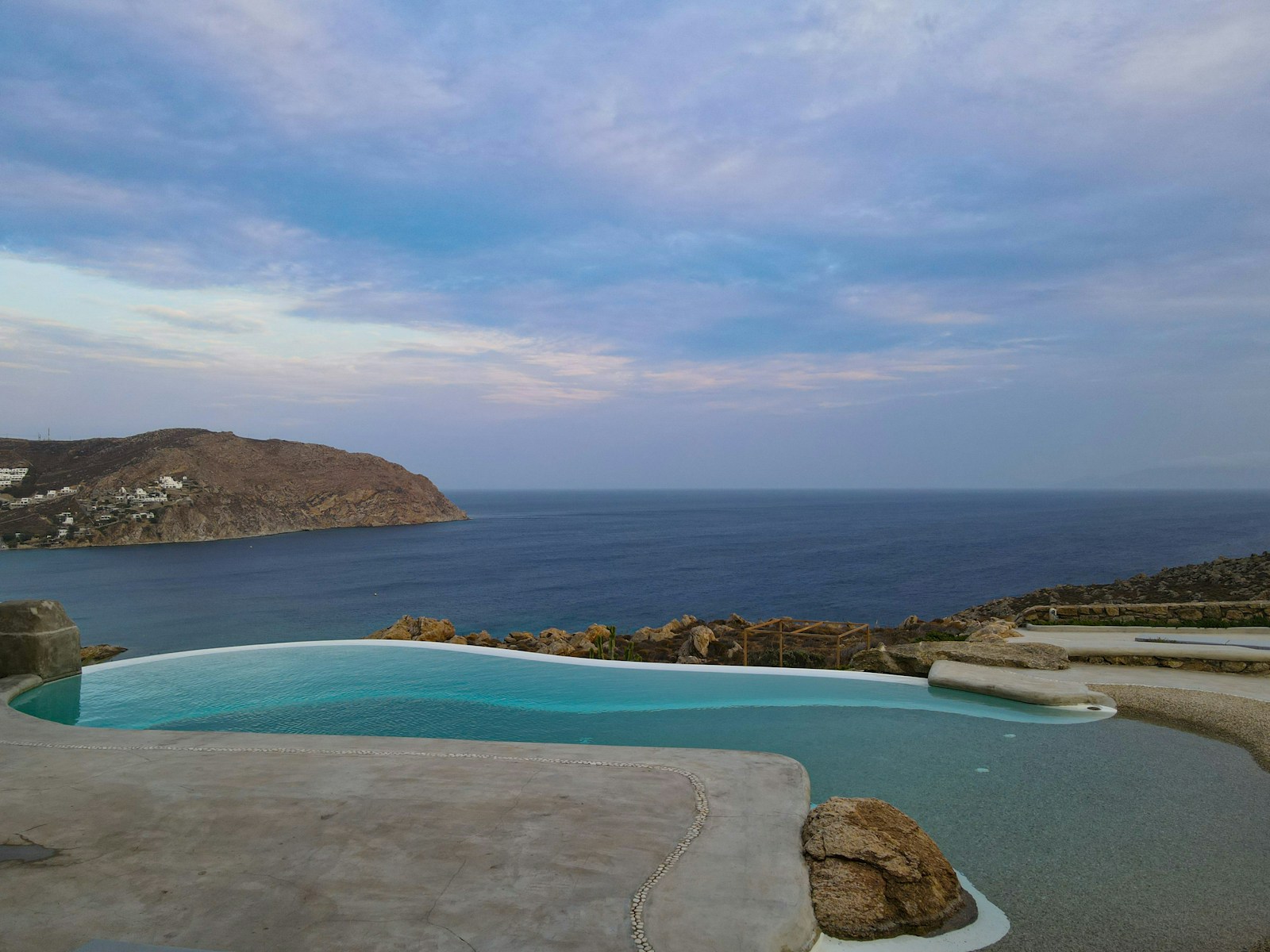
What a €45,000 week actually buys in 2026
The market price for a six-to-eight-bedroom top-tier villa on Mykonos, Santorini, or Paros during peak weeks (roughly 20 July through 25 August) has settled, in 2026, at approximately €45,000-€90,000 per week. That is the midpoint of the true luxury category – not the aspirational category advertised on the general rental platforms, but the properties actually used by the families and executive groups who drive the island’s private demand.
At this tier, the weekly rate typically includes: full staff of 4-7 (house manager, two housekeepers, a chef or cook, often a gardener-driver), daily housekeeping and turndown service, breakfast and one daily meal prepared by the house cook or executive chef, pool and grounds maintenance, transport coordination, reservations at the island’s restaurants and beach clubs, and what the Greek agencies politely call « situational discretion » – which on the trophy properties means layered security and staff trained not to recognize faces.
What it generally does not include: alcohol (stocked at guest cost), boat days, helicopter transfers, full concierge-arranged excursions, private yacht charter. These sit separately and together typically add €15,000-€50,000 to a week depending on use.
Mykonos: the social island
Mykonos remains the loudest of the three islands both literally and in market visibility. The southwestern coast around Psarou, Ornos, and Platis Gialos concentrates the beach clubs – Nammos, Scorpios, Principote – that define the island’s after-noon-to-midnight social calendar. Villa rentals that choose to sit close to this scene (Agios Ioannis, above Ornos) trade off some evening quiet for walking or short-drive access to the clubs.
Where the private villas actually are
The Mykonos villa map divides into three zones that matter. The southwestern social belt – Ornos, Platis Gialos, Psarou, Paraga – places villas within 10-15 minutes of the main beach clubs and restaurants. Properties here trade some serenity for proximity; rates are among the highest on the island because the location multiplies demand. The Agios Sostis and Fokos area on the quieter north coast hosts some of the most architecturally ambitious villas on Mykonos, including work by the Greek architect Aristides Dallas, whose stark geometric interventions in the landscape have become one of the island’s signature visual languages. The central highlands around Ano Mera and Elia provide the most privacy and the strongest views toward Tinos and Delos, at a small cost in driving time to the beach scene.
Villas worth the shortlist
The specific inventory shifts each season, but the villas repeatedly recommended by the concierge agencies working Mykonos in 2026 include Villa Narwhal in the Agios Sostis area (a 9-bedroom compound with three pools, priced in the €70,000-€95,000 weekly range), several of the Santa Marina Private Estates on the eastern coast (priced from €35,000 in shoulder season to €80,000 peak), and the villa portfolio managed by Myconian Collection, whose Kivotos Adult’s Only hotel also operates several adjoining private properties.
Timing the visit
The narrow counsel is to come either early June or mid-September if maximizing experience per euro matters. July is crowded and approximately 25% cheaper than August; the first two weeks of August are the peak of peak and command the year’s highest rates. Late September and early October retain warm sea temperatures (23-25°C) with most restaurants still open and rates at roughly 40-60% of August levels.
Santorini: the view is the product
If Mykonos sells the social calendar, Santorini sells the view. The caldera – the flooded volcanic crater forming the island’s western edge – is the single most photographed landscape in Greece, and the villas perched directly on its rim deliver an experience that no other island in the Mediterranean can replicate. The architectural vernacular of whitewashed stone cut into the cliff, rooftop terraces that extend into apparent void, infinity pools that read as extensions of the sea, is in Santorini both authentic and unavoidable.
The caldera villages
Oia, at the island’s northern tip, is the most famous and the most saturated caldera village. Villas in Oia rarely exceed three bedrooms because the traditional cliff-house construction does not easily scale; larger parties typically book neighbouring properties. Rates at the top end start near €18,000 per week for a two-bedroom caldera suite and reach €60,000+ for a four-bedroom cliff villa with private pool.
Imerovigli, on the caldera between Oia and Fira, hosts properties that are often considered the best value in the caldera tier because they offer equivalent views with slightly less crowd pressure. Grace Hotel’s private villas, the Grace Santorini suites that can be booked as whole-building takeovers, and a handful of independent properties sit in this category.
Fira itself is less sought after by the private-villa tier because of crowds. Akrotiri, at the island’s southwestern tip, hosts several hillside villas with sea views that avoid the caldera congestion entirely.
The sunset question
The ritual of sunset in Oia, which begins drawing crowds from about 17:30 in high season, is both the island’s defining cultural experience and its most intrusive. Villas with direct, unobstructed sunset views command premium rates largely because of this single daily event. A property advertised as « caldera view » that does not capture the full sunset arc is, in practice, a different product than one that does. Ask for orientation specifics during the enquiry process; the degree of western exposure varies more than the listings suggest.
Specific properties of note
The Andronis Group’s Private Collection, which includes villas adjoining the Andronis Boutique Hotel and Andronis Luxury Suites in Oia, represents one of the most consistent offerings in the caldera. Vora Villas in Imerovigli offers newer construction with a more minimalist aesthetic. For larger parties, the cliff villas of Santo Maris Oia Luxury Suites can be booked as multi-suite takeovers that effectively function as a private compound.
Paros: where Mykonos regulars go when they want quiet
Paros has been the Cyclades’ quiet secret for long enough that the phrase has stopped being accurate – it is now the Cyclades’ deliberately-chosen alternative, and the private villa market there has grown accordingly. The island’s appeal is structural: it is large enough to support real infrastructure, the villages (Naoussa, Parikia, Piso Livadi, Lefkes) are genuinely lived-in rather than performative, and the beaches stretch far enough that crowding has not yet become what it is on Mykonos.
Where to base a Paros stay
Naoussa, in the north, has become Paros’s primary luxury hub over the past decade. Its harbor has matured into a proper evening destination with several restaurants that compete credibly with Mykonos’s best, notably Barbarossa for seafood and Siparos on the nearby Santa Maria beach. Villas in the Naoussa hinterland – Kolymbithres, Santa Maria, Agii Anargyri – sit within 10 minutes of town.
The southern coast around Aliki and Pisso Livadi offers a quieter alternative with better wind exposure for beach days in August. The central village of Lefkes, inland and elevated, is the traditional Paros that Mykonos has lost – stone houses, narrow lanes, a single main square – and hosts a small number of exceptional villas for travelers who want the island experience without the sea as the center of gravity.
Villa benchmarks
Paros rates are typically 25-35% below equivalent Mykonos properties of the same calibre. A six-bedroom villa with pool in peak August that would rent for €55,000 on Mykonos rents for €35,000-€42,000 on Paros, without meaningful compromise on quality. The Parilio Hotel in Naoussa (Marriott’s Design Hotels portfolio) offers a handful of adjoining private villas, and the Cosme Luxury Collection property on the island has associated private residences available.
Booking, practicalities, and what the agencies do not quite tell you
The Cycladic private villa market operates through a relatively concentrated group of agencies, and which agency holds which property varies by season. The established names include Edge Retreats, Fish & Pips, Exceptional Villas, Villanovo, and for the trophy properties, several agencies that work largely by referral and do not maintain public websites. Pricing at this tier is always negotiable – never more than 10% in high season, but often 15-20% in shoulder weeks – and the dates of « high season » define themselves around August rather than calendar months.
The staff question
The quality of the house staff is the single biggest variable in the villa experience and the hardest thing to assess before arrival. Good agencies vet this; less good ones rent the property. Specific questions worth asking during the booking process: how many years has the current house manager been with this property, does the cook have formal culinary training or is this a housekeeper who also cooks, and what is the standard ratio of staff hours per guest per day. The well-run villas deliver something in the range of 8-12 staff hours per guest per day during a full-service stay; the less well-run ones deliver under 5.
Transport logistics
Reaching the villa from Athens – the standard European arrival point – is a logistical exercise that the better agencies handle seamlessly and the lesser ones mishandle expensively. Direct commercial flights land on Mykonos (JMK) and Santorini (JTR); Paros (PAS) receives smaller aircraft and more domestic connections. Private aviation from Athens Eleftherios Venizelos to any of the three costs €3,500-€8,000 one-way depending on aircraft and party size. Ferry transfers from Athens’s Rafina or Piraeus ports to Paros take 3-5 hours depending on vessel, and ferry transfers between the three islands are in the 30-120 minute range. Private yacht or catamaran charters operate inter-island transfers at €1,200-€4,000 depending on distance and vessel.
The unfashionable weeks
If the trip is flexible, the weeks immediately following August 25 and immediately preceding July 10 are substantially better value without substantial compromise on weather or restaurant availability. Many of the trophy villas quietly drop their rates by 35-50% for these shoulder weeks, which sit in their contracts but are not advertised. The concierge agencies know this; guests who do not ask do not generally receive.
The food and wine layer
The island food scene has matured rapidly over the past five years. The Cycladic tradition – emphasis on fresh fish, local cheese, tomatoes and capers, simple grilled preparation – has been joined by a newer generation of restaurants working at genuine Michelin-adjacent standards. On Santorini, Selene in Pyrgos continues to define contemporary Greek cuisine at the highest level. On Mykonos, Nobu at the Belvedere remains the consistent international benchmark while Kiku (Japanese-Mediterranean fusion) has joined it in recent seasons. On Paros, Siparos and Barbarossa have both been mentioned regularly in the serious food press.
Santorini wine – particularly Assyrtiko from the island’s distinctive basket-trained vines – has continued its global rise. Estate Argyros, Domaine Sigalas, and Gaia Wines all welcome visitors for tastings, and serious villa stays will typically include a vineyard visit in the itinerary.
What’s new in 2026
Three shifts matter this year that did not eighteen months ago. First, Greece’s short-term rental tax regime has been updated, and villas operating above the luxury threshold are now subject to an additional climate adaptation levy that agencies are passing to guests as a line item – typically €300-€800 per week. Second, the expansion of private aviation capacity at Mykonos and Santorini airports has reduced the historic peak-season bottleneck for private arrivals, though slot availability still tightens sharply around August 10-20. Third, the opening of several new cliff villas on Santorini’s eastern coast – historically less developed than the caldera side – has added genuine large-villa capacity to an island previously constrained by its cliff-face architecture.
Which of the three?
The honest counsel, from the agencies who place guests repeatedly across all three, is that Mykonos rewards groups wanting social density and nightlife, Santorini rewards couples and smaller groups prioritizing the single most photographed landscape in the Mediterranean, and Paros rewards travelers who have already done both and want the Cycladic experience at a human scale. None of the three is a mistake; each is a different holiday.
For travelers prioritizing the combination – a week on Santorini followed by a week on Paros is increasingly popular – the 30-minute ferry between the two islands makes the split trivial to arrange. The Mykonos-Paros combination works similarly. The Santorini-Mykonos combination requires more sea time but is well handled by private yacht.
References and further reading
For ongoing coverage of the Greek islands in the luxury press, the travel sections of the Financial Times HTSI, The New York Times Travel, and The Economist’s 1843 magazine provide consistently useful orientation. For practical logistics, the Condé Nast Traveler island guides are updated annually.
For related pieces, see our companion essay on the new generation of Cycladic boutique hotels and our guide to Santorini’s vineyards and Assyrtiko estates.
The Greek islands are not, in 2026, a discovery. They are a destination that has arrived fully into its own luxury maturity, which is both their reward and – for the traveler seeking the undiscovered – their complication. What has not changed, and will not change regardless of how the market evolves, is the specific quality of the light on those stone terraces at seven in the evening. That is the reason people first came to the Cyclades, and it remains the reason they still do.